Forest Restoration Update | 2026
The Land Trust will begin selective ecological thinning in fall 2026. Once managed as a working tree farm, the Preserve has missed planned thinnings and developed into overcrowded forest stands with declining tree health and low species diversity. Removing some smaller trees will open up the canopy, allowing larger trees to thrive and encouraging growth of native understory plants. Ecological thinning is a critical tactic to improve forest health, enhance wildlife habitat, reduce wildfire risk, and increase resilience in face of a changing climate.
Frequently Asked Questions
What is ecological thinning?
The Land Trust is removing select smaller trees in overcrowded stands on the Preserve. This will promote forest health and more natural conditions in areas that were once managed as a tree farm. Most of the felled trees will be used on site to create “habitat piles” or left as logs where these valuable habitat features are lacking. A few mid-sized trees will be left as snags (standing dead trees) to add essential elements of nesting and foraging habitat.
Why is thinning needed?
One key concern is that multiple areas within the forest are at high risk of drought and disease outbreaks. There are many trees, all the same age, and very close together, with many dead lower branches. With no action, there is a greater chance that we will lose whole stands to drought, pest, disease, or wildfire. By felling some trees, the whole stand will be more resilient.
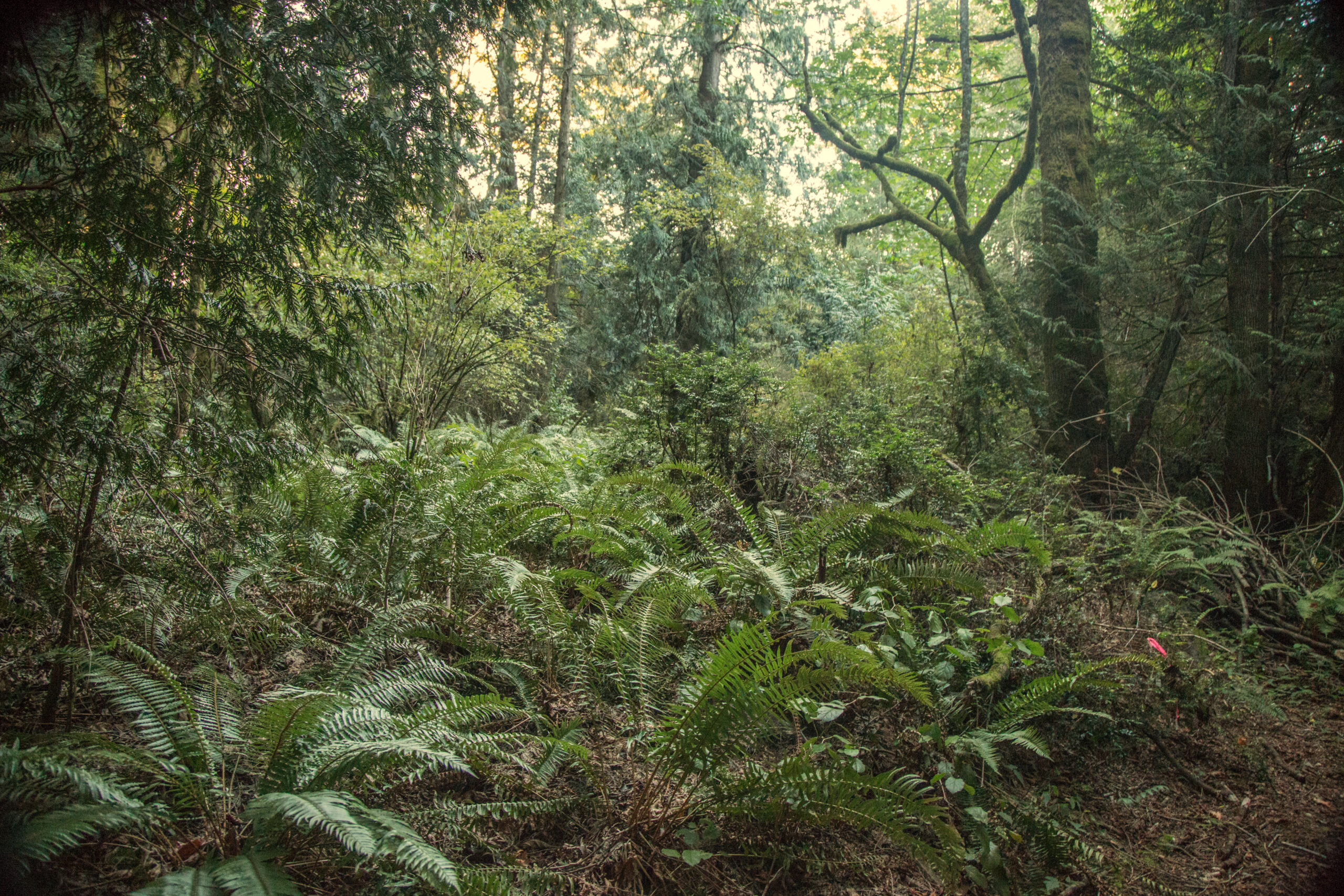
A second concern is that these densely planted stands shade out understory vegetation, reducing habitat quality. These stands were planted as “crops” in a timber plantation: all trees of one species and age, and planted so dense that in some places very few ferns, shrubs, or tree seedlings are able to get started. Removing a few trees will open up the canopy, letting in just enough light for understory plants to establish. With careful follow up, we will ensure that native plants fill in that space rather than invasives.
You can think of a timber plantation like planting more seeds in your home garden than you actually have room to grow. Many gardeners plant extra seeds with the intention of removing some sprouts (Think of the instructions for most squash varieties: “Sow seeds in hills 8” apart, 4 seeds per hill. Thin to 1 seed per hill.”). In this case, the “gardener” planted too many seeds with intention of thinning about 20 years ago. Now it is past time to remove some so that the others can have more room to grow healthily.
Will this work impact trail use?
To a limited extent. In late September, the Preserve will remain open to the public as work is completed in the southeast corner of the property, away from public trails. Later in October, work along the trails may require brief trail closures. Information about work dates and area closures will be posted on site in advance.
Why is the thinning being done now?
A major reason is that trees in the parts of the forest that were replanted as tree farm — the areas where the thinning will be done — are close to a point of no return, beyond which we are at risk of losing all the trees in that area at the same time to disturbances. Once crowding causes trees to lose too much of their live canopy, leaving just a few live branches at the top, it becomes very hard for them to recover after thinning. They have very little capacity to photosynthesize and feed themselves until they grow higher and add healthy new branches. So, we need to act quickly.
When the trees were originally planted, the owners planned to thin the young trees to a more healthy spacing, just like one would thin carrots in a kitchen garden. However, they did not get around to that thinning. As the current steward of this land, the Land Trust took on a narrowing window of time in which to do the required work to improve the health and resiliency of the remaining trees and forest as a whole.
So why not let this happen naturally? In this case, the forest has already been disturbed and is not functioning naturally — the way in which these trees were planted has created unnatural conditions. Ecological thinning will incrementally nudge the tree farm areas towards natural conditions, creating a better starting point for nature to take its course.
How did the Land Trust decide where to do the thinning?
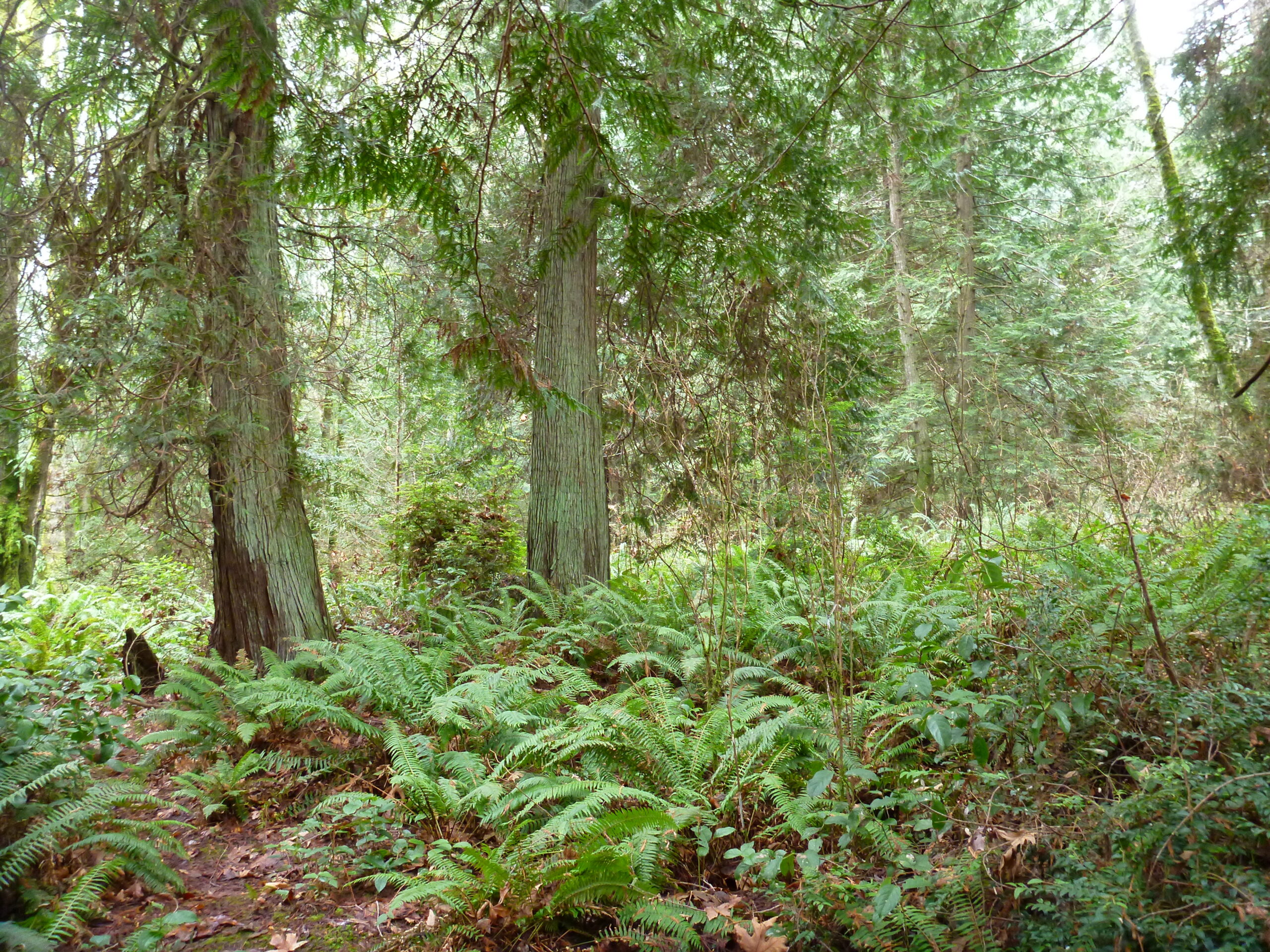
The work is being done primarily in areas that were planted around 1996 as Douglas fir and Western red cedar plantations. Today, we can see these areas along the trail as straight rows of tall trees all the same species and roughly the same height. The understory is bare because these trees shade out most of the shrubs and ferns you see in other parts of the forest.
The Land Trust worked with a regional expert, Northwest Natural Resources Group, to develop a forest management plan that provides guidance on how the forest may be managed for greatest ecological benefit. This plan maps the forest into units with similar characteristics, history, and management needs. The Land Trust has expanded upon this work by conducting a detailed forest inventory and establishing permanent monitoring plots.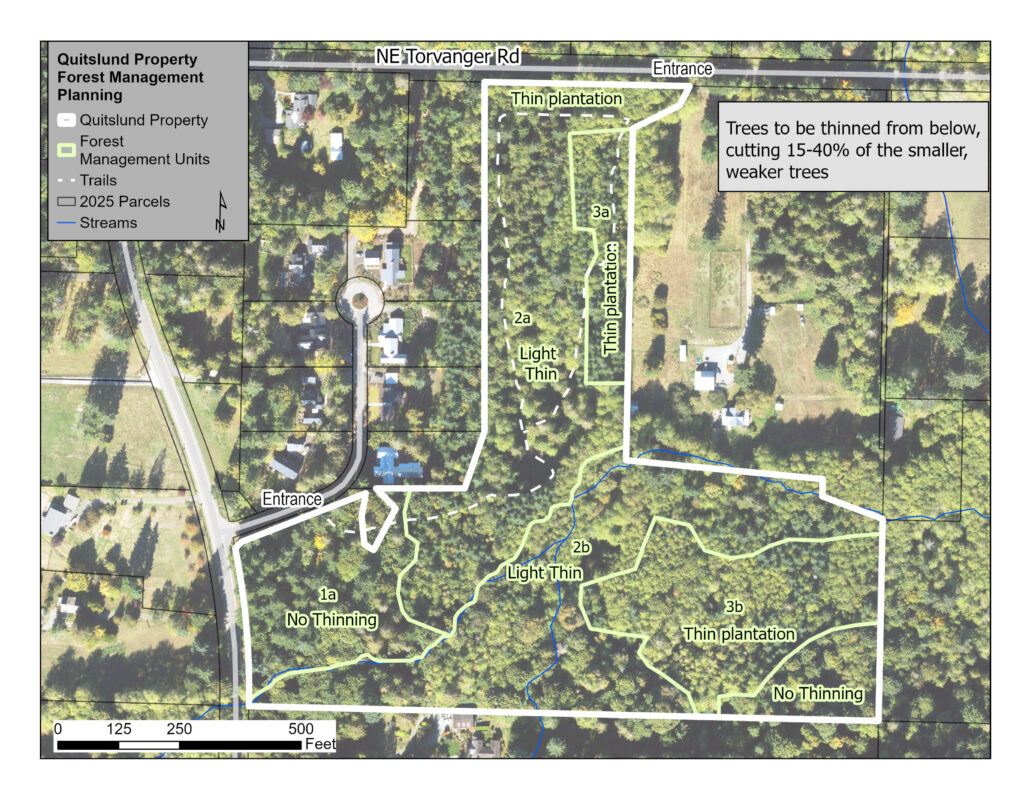
How is the Land Trust monitoring the effects of ecological thinning?
The Land Trust has operated and continues to operate wildlife camera stations and bird acoustic monitoring stations in Quitslund Preserve. These stations allow Land Trust staff to evaluate wildlife presence in the preserve over time. You can read more about how land trusts and other conservation groups are using bird calls to monitor the effectiveness of forest management at the Cornell Lab of Ornithology.
The Land Trust’s has established permanent monitoring plots for long-term forest inventory. These are areas of the forest where we’ve literally counted and measured every tree, along with a lot of other information, then periodically retake measurements and photos to track changes over time.
We’d love to have neighbors join us to monitor forest health long term! If you’d like to learn more or get involved, please contact Megan Rohrssen, Community Education Coordinator.
What happens to the wood after it is cut?
Most of the trees we cut will remain in the forest and used to create habitat piles and constructed logs. Large downed wood is missing from the timber plantation areas, much of which was farmed prior to tree planting. This wood is very valuable for wildlife habitat, replenishing soil carbon, and as a starting place for plants like red huckleberry that tend to grow best on nurse logs and stumps. Some smaller material left after thinning may be chipped and used on trails, if deemed necessary for reducing fire hazard.
The Land Trust will work with an experienced local woodworker, trading some logs in exchange for use of their equipment and help with felling more dangerous trees. The woodworker is not involved in the selection of trees to be thinned. This partnership helps us conduct work we might not be able to manage on our own, and in turn maximize forest health.
How is the Land Trust paying for this?
The Land Trust received an Environmental Quality Incentive Program grant from the Natural Resources Conservation Service to conduct part of this work. This grant will pay for the cost of cutting some small diameter trees and builds our capacity by supporting a training event for staff at the Land Trust and partner organizations on Bainbridge Island.
Does the Land Trust plan to do similar forestry work at other properties?
Many forests on Bainbridge and throughout Kitsap have been impacted by timber harvest, removal of large wood, and replanting at very high density with no follow-up thinning. As a result, many forests on our Island would benefit from the same kind of science-led intentional forestry work.
How can I get involved with the Land Trust?
- Join the Friends of Quitslund: Reach out to Sydney Akers, Stewardship Coordinator, if you’re interested in helping us steward and monitor the property.
- Volunteer at a Work Party and care for our conserved lands across the Island through invasive species removal & native plantings.
- Sign up for our newsletter for updates on conservation initiatives, upcoming events & volunteer opportunities.
- Donate to the Land Trust: Your generosity makes it possible for us to restore and steward for this land for future generations.